
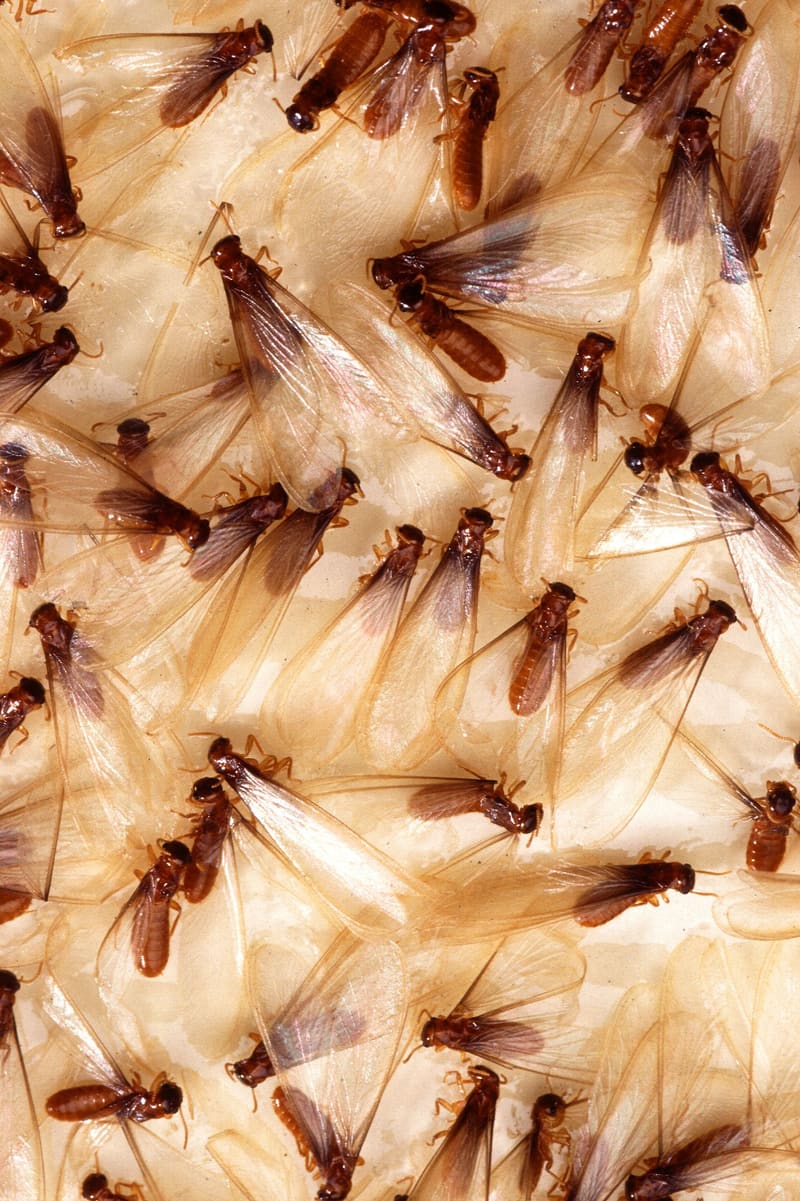
Flying termites, also called alates, swarmers or kelkatu, are the winged males and females that leave a mature termite colony to start new ones. They usually appear at dusk after rain, gather around lights and then shed their wings. A few outdoors is normal in Malaysia; a swarm coming out from inside your walls, floor or cabinets means a colony is already in the building.
What are flying termites?
Flying termites are the reproductive caste of a termite colony. Unlike the pale, blind workers, alates have dark bodies, working eyes and two pairs of long wings of equal size. Their only job is to leave the nest, find a mate and start a new colony.
In Malaysia people call them kelkatu in Malay and 大水蚁 in Chinese, and in English you will also see them called termite alates, swarmers or simply termites with wings. A mature colony produces them in batches, and on the right evening thousands can emerge at once.
Why do flying termites appear after rain?
Swarming is timed for warm, humid evenings, often right after rain, when the soil is soft and moist. That gives the new king and queen the best chance of digging into the ground and surviving. Across the Klang Valley, swarms are common in the evenings after afternoon thunderstorms, especially during the rainier months.
Alates are strongly attracted to light. That is why you find them gathered around porch lamps, street lights and windows, and why they get inside through gaps around doors and windows when the lights are on.
Do flying termites mean my house has termites?
Not always, but they always mean a colony is nearby. What matters is where they came from:
- A few alates outside, around street lights or garden lamps: common across Malaysia. They may have flown in from a colony some distance away.
- Many wings on window sills and around indoor lights: they may have come in from outside, but it is worth checking the house.
- Swarmers coming out of a wall, skirting, floor, door frame or cabinet: a colony is already inside the structure. Book an inspection.
The discarded wings are often the best clue. Alates shed their wings within minutes of landing, so small piles of identical, translucent wings near a window, under a light or along a door sill tell you a swarm happened there.
Flying termites vs flying ants: how to tell them apart
Flying ants also swarm after rain, and they look similar at first glance. Three differences:
| Flying termite (alate) | Flying ant | |
|---|---|---|
| Waist | Thick, straight body with no pinched waist | Narrow, pinched waist between thorax and abdomen |
| Wings | Two pairs of equal length, much longer than the body; break off easily | Front wings longer than back wings; stay attached longer |
| Antennae | Straight, bead-like | Elbowed (bent) |
For more on telling them apart, read termites vs ants.
What should you do when flying termites swarm indoors?
- Turn off unnecessary lights and close windows and doors to stop more coming in.
- Don't spray the walls or floor. Spraying won't reach the colony and makes it harder to find where they came out.
- Note where they emerged. A crack in the floor, a gap in the skirting, a light fitting or a cabinet base all help us locate the source.
- Keep some wings or a photo. Sweep up the swarmers, but a photo of the wings and the spot is very useful.
- Look for other signs nearby: mud tubes, soft or hollow timber, soil in cracks. See the 7 signs of termites.
- Arrange a free termite inspection.
Can a pair of flying termites start a colony in my house?
It is possible but uncommon. Most alates die within hours. A pair that does survive needs moist soil or damp timber to establish a nest, and a new colony grows slowly for its first few years. The bigger concern is the mature colony that produced the swarm, because it is already large enough to cause damage.
How do you stop termites after a swarm?
Deal with the colony, not the swarmers. For subterranean termites, which cause most damage in Malaysian homes, that means finding where they are entering and eliminating the colony, usually with a termite baiting system. Workers carry the bait back to the nest, and the colony gradually dies off, so it stops producing swarmers too.
For the bigger picture, see termites in Malaysia: the complete guide.