
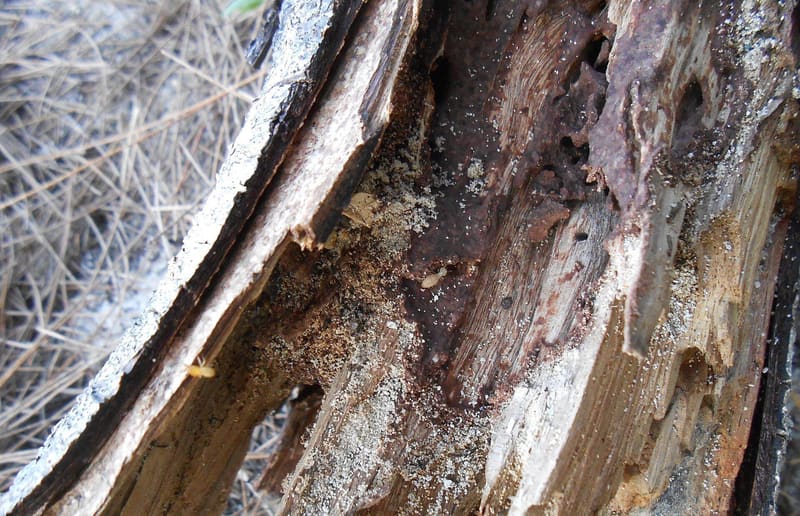
To get rid of termites for good you have to eliminate the colony, not just the termites you can see. Sprays, powders, salt and other DIY methods kill termites on contact, but subterranean colonies live underground, often metres away, and simply send more workers. Baiting systems such as Sentricon®, which workers carry back to the nest, are the most reliable way to end an active infestation.
The short answer
Kill the colony, not just the termites. A subterranean termite colony in Malaysia can contain hundreds of thousands of termites, living underground and feeding on several food sources at once. The termites in your door frame are a small part of it. Anything that only kills what it touches leaves the rest of the colony, and its queen, free to carry on.
This guide is honest about what DIY methods can and can't do, so you can decide what makes sense for your home.
Does termite spray work?
Termite spray kills termites on contact, and that's all it does. Spray a mud tube or a damaged frame and you will kill the workers in it. But the colony recognises the threat, abandons that route and comes in elsewhere. A few months later, the termites appear in another cabinet or another room.
Shop-bought termite sprays and powders have a place for killing a few termites you can see, but they are not a solution for an active infestation. Spraying before an inspection also makes it harder for a professional to find the activity, and if you choose baiting, it kills the very termites that would carry the bait home.
Does salt kill termites?
Salt dehydrates insects, so it can kill termites it touches directly. It doesn't reach the colony and won't stop an infestation. Pouring salt or salt water into holes and tubes can also damage timber, grout, tiles and metal fittings, and it won't prevent new tunnels.
Other DIY remedies
You will find plenty of suggestions online. Here's what they actually do:
| Method | What it does | Does it end an infestation? |
|---|---|---|
| Insect spray / termite spray | Kills termites on contact | No: colony survives |
| Salt, vinegar, boric acid, orange oil | May kill termites they touch | No: doesn't reach the colony |
| Removing damaged wood | Removes what termites were eating | No: they move to the next food source |
| Sunlight / drying timber | Drywood termites in small loose items may die | No for subterranean termites in the building |
| Online "termite bait" products | Varies widely by product | Unreliable: placement and monitoring are key |
What DIY can genuinely help with: prevention
You can't eliminate a colony with household products, but you can make your house much less attractive:
- Fix leaks in kitchens, bathrooms, gutters and air-conditioner drains. Moisture draws termites.
- Keep timber off the soil: firewood, old planks, wooden planter boxes, garden furniture.
- Leave a gap between garden beds or mulch and the walls of the house.
- Remove old stumps and dead trees near the building.
- Seal obvious cracks in floors and gaps around pipes (after an inspection, so you don't trap an active colony inside).
- Inspect before you renovate. New cabinets and flooring are easier to protect before they go in.
How professionals get rid of termites
Baiting: eliminating the colony
Termite baiting is the most reliable way to end an active subterranean infestation. Bait stations go in the soil around the building and on active spots inside. Worker termites feed on the bait and share it with the colony. The bait stops termites from moulting, so the colony gradually dies off, queen included.
It takes patience, typically from a few weeks to a few months, but it removes the source rather than chasing termites around the house. Stations can stay in place afterwards to intercept new colonies. See the Sentricon® termite baiting system and how the colony and queen work in termite queen and nest.
Soil treatment: protecting new builds
For new houses, extensions and renovations, termiticide applied to the soil before the floor slab is cast creates a protective zone under the building. It is the standard approach during construction. See anti-termite treatment.
When to stop DIY and call someone
- You see live termites or active mud tubes inside the house
- Flying termites swarm indoors
- Termites came back after you sprayed
- You find damaged structural timber: roof trusses, staircases, door frames
- You are buying, renovating or extending a property
A free termite inspection will tell you what you are dealing with and give you a quotation. Wondering about cost? Read what affects termite treatment cost in Malaysia, or see how our termite treatment works.