
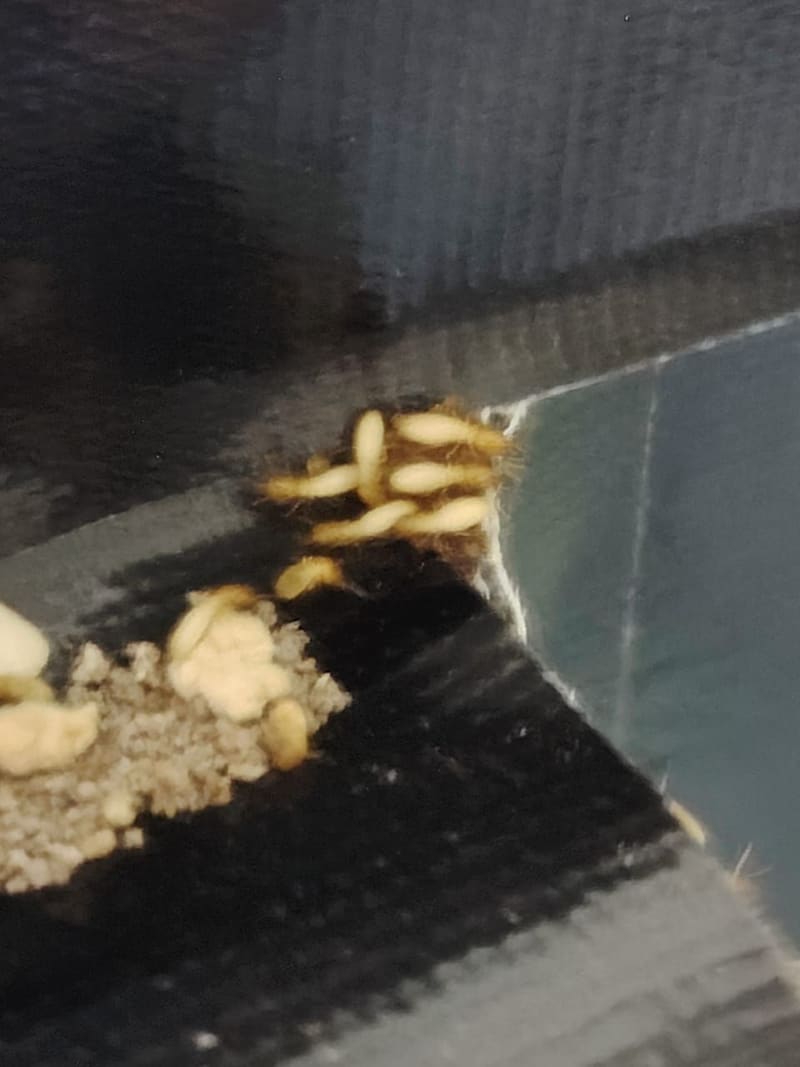
Termites usually start feeding within days to weeks of finding a bait station; on the job in these photos, they were feeding the day after the station went in. Eliminating the colony then takes a few weeks to a few months, depending on its size and how actively the termites feed. The bait works slowly on purpose, so it spreads through the whole colony before termites start dying. Stations are checked on monitoring visits until activity stops, and in-ground stations can stay as long-term protection.
What happens after the bait goes in?
On this job, the termites were feeding on the bait one day after the station was installed. That's the first thing we want to see: termites finding the bait, eating it and carrying it back to the colony.
How quickly it happens varies. Above-ground stations are fixed directly on active mud tubes or damaged timber, where termites are already travelling, so they often find the bait within days. In-ground stations around the outside of a building can take longer, because termites have to come across them while foraging through the soil.
How does termite bait work?
Worker termites eat the bait and share it with the rest of the colony, mouth to mouth. That's how the bait reaches the termites that never leave the nest: the queen, the young and the soldiers, which all depend on the workers for food.
The bait we use is genuine Sentricon® bait. Its active ingredient stops termites from moulting, the process they need to grow. A termite that can't moult dies, and as workers die off, the colony can no longer feed itself and collapses, queen included. See the Sentricon® termite baiting system for how the stations are laid out.
Why does baiting take weeks, not days?
The slow action is deliberate. If the bait killed termites straight away, the first ones to eat it would die before passing it on, and the colony would learn to avoid the station. Because termites only die when they try to moult, the bait has time to spread through the colony first.
That's why colony elimination usually takes from a few weeks to a few months. The main factors are:
- Colony size. A large, established colony takes longer than a small one.
- How actively termites feed. Stations on busy mud tubes get eaten faster.
- Whether termites are disturbed. Spraying or breaking up tubes slows everything down.
Why are soldier termites around the station?
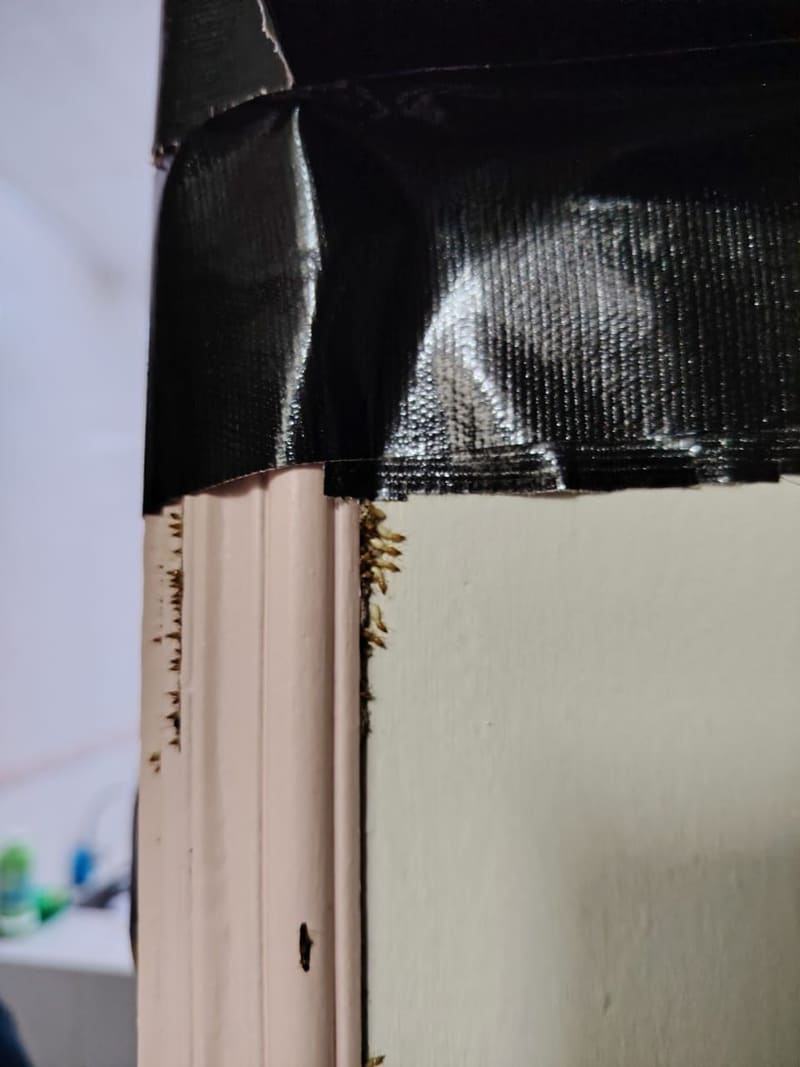
Soldiers guard openings in the colony's tunnels. When a mud tube or a damaged frame is opened up to fix a station, soldiers come out to defend the gap. On this door frame, they lined up along the crack right beside the station.
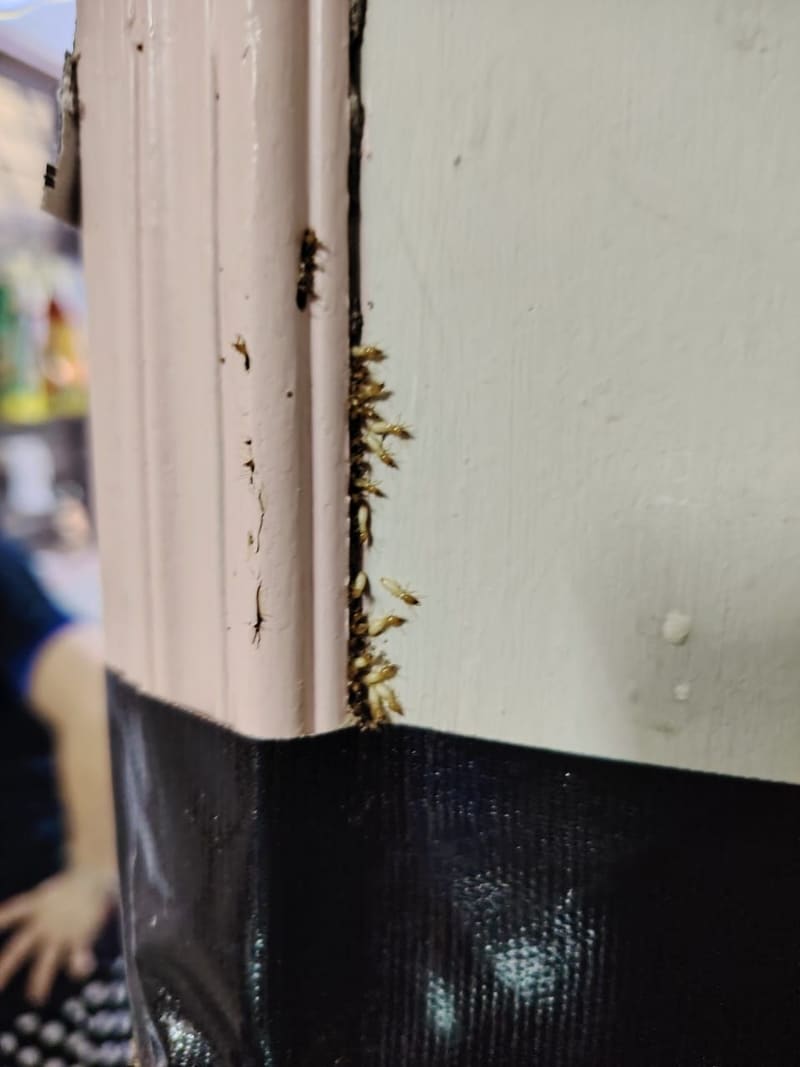
Seeing soldiers there tells you the colony is active at that spot, which is exactly where the bait needs to be. Leave them alone: the workers behind them are the ones that will carry the bait back.
What will you notice as it works?
- First few days to weeks: termites feeding at the stations. Activity may even look busier as workers recruit others to the food.
- Following weeks: fewer termites at the stations, and mud tubes that stop being repaired or start to dry out.
- The end: no termites at the stations and no new mud tubes. You usually don't see dead termites, because they die inside the colony.
How often are the stations checked?
Stations are checked on monitoring visits until the activity stops. On each visit we check every station, replace bait as it's eaten and record what we find. The visit schedule is set out in your quotation, because it depends on how many stations there are and how active the termites are.
What should you do while baiting is in progress?
- Don't spray insecticide on or near the stations or the mud tubes
- Don't open, move or knock the stations, or remove the tape holding them
- Don't break up mud tubes, even ones away from the station
- Do send us a photo on WhatsApp if you see termites somewhere new, so we can add a station there
Should the stations stay after the colony is gone?
Above-ground stations come off once activity has stopped. In-ground stations around the building can stay in place as ongoing protection. New colonies can move in from neighbouring land over time, and stations already in the ground intercept them before they reach the house. We'll explain the options when the job is finished.
Have termites now? Send us a photo on WhatsApp with your area, and we'll arrange a free termite inspection.