
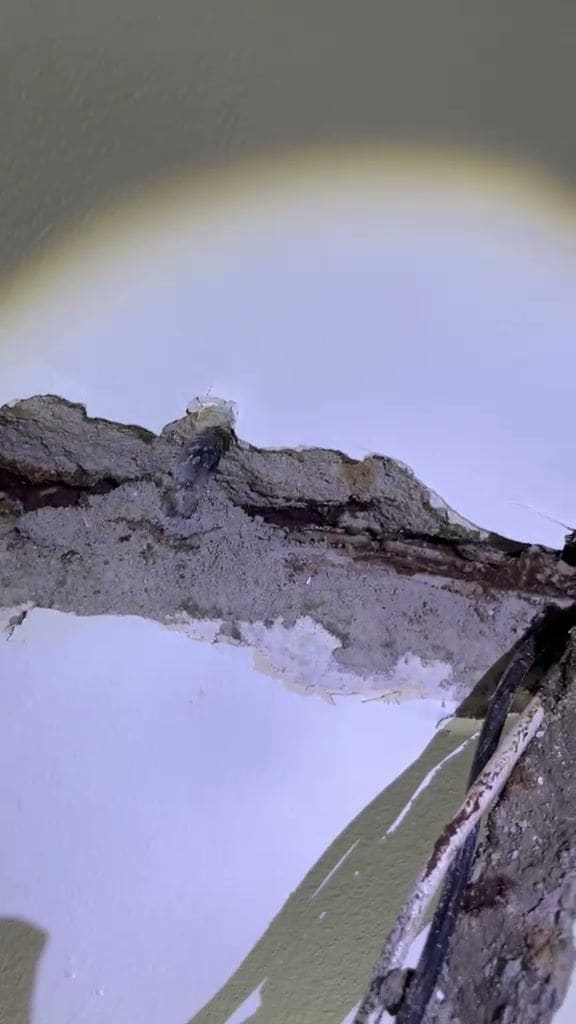
No. Termites can't eat or digest concrete or cement; they eat cellulose, which is in wood, paper and cardboard. But concrete doesn't stop them. Subterranean termites travel through hairline cracks, the joints between floor and wall, gaps around pipes and cables, and weak or hollow plaster, building mud tunnels as they go, to reach the timber, cabinets and fittings inside a concrete house.
Do termites eat concrete or cement?
No. Termites eat cellulose, the material in wood, paper and cardboard. They can't digest concrete, cement or brick. That's why the question usually comes up when someone finds termites somewhere that looks like solid cement, and wonders how they got there.
The answer is that termites don't go through concrete. They go through the gaps in it.
How termites get through concrete walls and floors
Subterranean termites, the kind behind most termite damage in Malaysian homes, live in the soil and need to stay damp and hidden. To reach food above ground, they look for any opening and line it with mud. In a concrete house, the usual ways in are:
- Hairline cracks in the floor slab, walls or plaster
- Joints where the floor meets the wall, and between slabs
- Gaps around pipes, drains and electrical conduits where they pass through the floor or wall
- Hollow or crumbling plaster and render, which they can tunnel behind or through
- Wall cavities and the space behind skirting and tiles
On this job, termites had tunnelled inside the cement plaster of a wall. When the damaged plaster was broken away, their mud tunnels were running through it, right beside the electrical wiring.
Why the wiring matters
Termites often follow cables and conduits through a wall, because the gap around them is a ready-made path. They don't eat the wire, but soft cable insulation can be damaged along the way, and broken plaster near live wiring is a hazard in itself.
If you find termites inside a wall near electrical points, switch off that circuit if anything looks exposed, and have an electrician check it once the termites have been treated.
What termites eat inside a concrete house
Once they're in, termites go for anything containing cellulose:
- Door and window frames, skirting and built-in cabinets
- Parquet, laminate and timber flooring
- Ceiling battens and roof timber (see termites in the ceiling)
- Books, documents, cardboard boxes and stored clothing
- The paper facing on plasterboard
See the 7 signs of termites to know what to look for.
What to do if you find termites in a cement wall
- Don't break away more plaster or spray the tunnels. The termites in them are the ones that would carry bait back to the colony.
- Keep clear of exposed wiring and switch off the circuit if needed.
- Take photos and send them to us on WhatsApp with your area.
We fix bait stations on the active tunnels so termites carry the bait back and the colony dies off, then check them on monitoring visits. See how long termite baiting takes. Repair the plaster after the activity has stopped.
Can concrete stop termites before they start?
For new buildings, the protection goes under the concrete. An anti-termite soil treatment before the slab is cast puts a treated layer under the floor, so termites coming up from the soil meet it before they find a crack. For existing homes, in-ground bait stations around the building do the same job from the outside.
Found mud tunnels in a wall or floor? Send us a photo on WhatsApp for a free termite inspection, or see our termite treatment.