
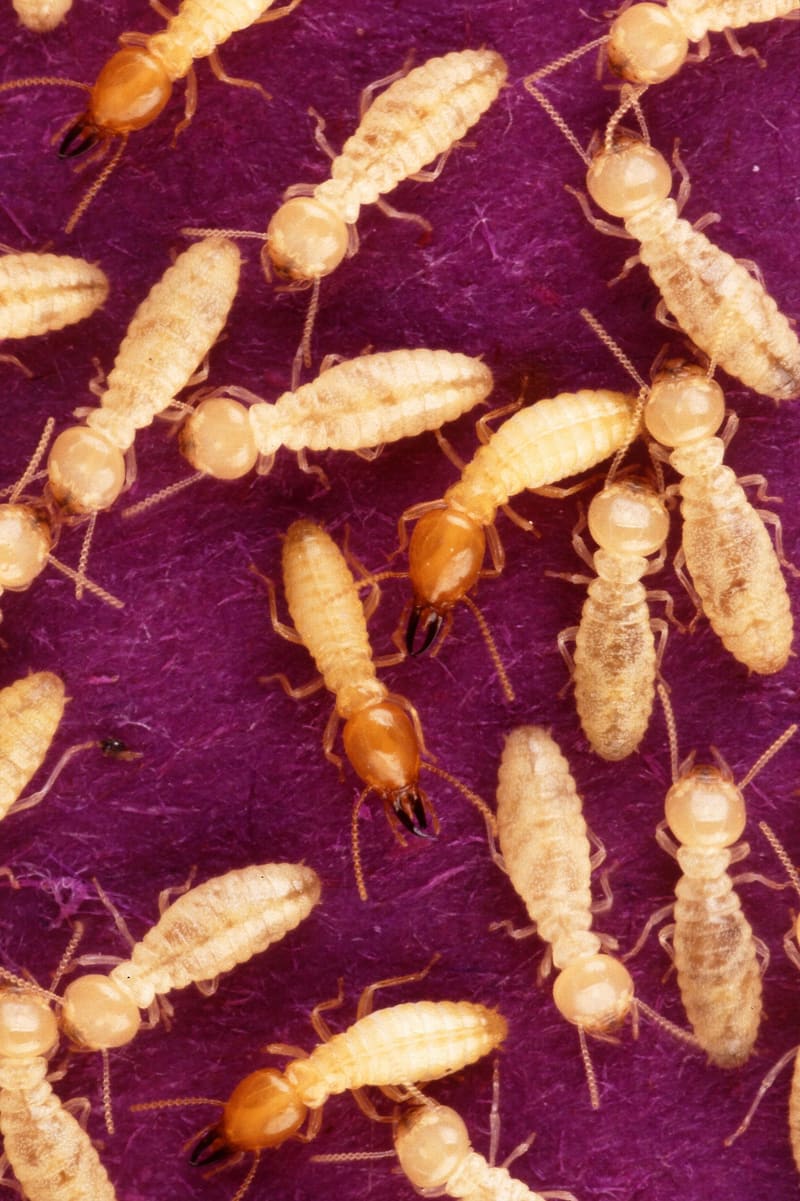
Scientists have been studying Malaysia's termites since the 1890s, when the British naturalist G. D. Haviland collected about 1,000 termite nests in the Malay Peninsula, Borneo and South Africa. In 1992 the Forest Research Institute Malaysia (FRIM) recorded about 175 species in Peninsular Malaysia. Later research showed that one species, the Asian subterranean termite, causes most of the termite damage to buildings.
Who first studied termites in Malaysia?
One of the first was George Darby Haviland (1857–1901), a British surgeon and naturalist who worked in Sarawak in the 1890s. He served the Sarawak government and was curator of the Sarawak Museum in Kuching. Sources disagree on his exact years there.
In 1898 he published Observations on termites; with descriptions of new species in the Journal of the Linnean Society of London. The paper described termites he had collected in South Africa, the Malay Peninsula and Borneo, about 1,000 nests from about 90 species. He credits "Ridley of Singapore" with first encouraging his collecting. That was Henry Ridley, director of the Singapore Botanic Gardens and the man who promoted rubber growing in Malaya.
Several of Haviland's species names are still used today:
- Globitermes sulphureus is a yellow mound-building termite whose soldiers can burst themselves open to defend the nest. Read the exploding termites story.
- Cryptotermes domesticus is a drywood termite that lives inside dry timber.
How many termite species does Malaysia have?
About 175 species in Peninsular Malaysia alone. The count comes from Termites of Peninsular Malaysia by Tho Yow Pong. FRIM published it in 1992 as Malayan Forest Records No. 36, edited by L. G. Kirton, and it was the first full account of the Peninsula's termites. It lists about 175 species from 42 genera in three families.
Most of those species never touch a house. They live in forests, plantations and gardens and feed on dead wood, leaf litter and soil, recycling dead plant matter. Only a handful are building pests, and one of them causes most of the damage.
Why did Malaysia's main house termite go by the wrong name?
For decades the main pest termite in Malaysian buildings was recorded under several names. Researchers only sorted this out in the 2000s:
- 2003: Kirton and Brown showed that Coptotermes havilandi is the same species as Coptotermes gestroi, which was named first, in 1896. Since then the species has officially been C. gestroi, the Asian subterranean termite.
- 2005: FRIM entomologist L. G. Kirton wrote that, with the names sorted out, there was a single main pest species of Coptotermes in Peninsular Malaysia, not the three previously assumed. He added that C. gestroi "is responsible for most of the damage to wood in buildings" in urban areas.
- 2005: Goh and Lee of Universiti Sains Malaysia (USM) collected Coptotermes termites around Penang Island. C. gestroi was the most common species attacking buildings. The three other species made up less than 5% of what they collected, all found outside buildings. Earlier figures they quoted had put a different species, C. travians, on top at 53%.
This matters because termite treatment is planned around the termite's biology. More about the species in our guide to the Asian subterranean termite.
Do termites attack Malaysia's heritage buildings?
Yes, and in 2026 it made the news. On 4 August 2026 a wooden beam and debris fell from a heritage building on Lebuh Armenian (Armenian Street) in George Town, injuring two tourists. The New Straits Times reported that initial checks found a termite-damaged wooden beam triggered the collapse. Penang's state government then said it would assess the structural safety of heritage buildings across the state.
Researchers had already flagged the problem:
- George Town: A Universiti Sains Malaysia study of two heritage shophouses in Penang, one built before 1900 and one after, found termite attack in both, alongside dampness, cracking and loose plaster. Termite attack and timber decay were the most common defects on the internal timber floors.
- Melaka: A study of traditional Malay timber houses found termite infestation and fungal decay among the main kinds of deterioration. Poor ventilation, high humidity, flooding and little preservation work all sped up the decay.
- Historic buildings generally: A Universiti Teknologi MARA (UiTM) study of termite attack on historical buildings found the damage concentrated in their timber structure and materials.
What does the research mean for your home?
Malaysia's most damaging termite lives in the soil, travels long distances and attacks from out of sight. Penang research found that a single colony of this species can forage up to 30 metres away and contain millions of termites. Spraying the termites you can see rarely ends the problem. The colony has to be eliminated, which is what a termite baiting system is designed to do.
If you have found termites, see our termite treatment options and prices. Send us a photo and your area on WhatsApp for a quotation.
Five fun facts from Malaysian termite research
- The naturalist behind many Malaysian termite names was a doctor. Haviland trained as a surgeon, and he also collected plants. Several plants are named after him.
- One Malaysian termite has a nickname in another country. In parts of Asia the Asian subterranean termite is called the "Philippine milk termite".
- Malaysia's main house termite now lives in Florida. A colony was found in a church and a shop in Miami in 1996, far from its home in Southeast Asia.
- Some Malaysian termites explode. Globitermes sulphureus soldiers can rupture their own bodies to spray a sticky yellow fluid at attackers.
- There is a fly that lives inside termite soldiers' heads. USM researchers found it in termite mounds on the university's Penang campus. See what's inside a termite mound.
Sources
- Haviland, G. D. (1898). Observations on termites; with descriptions of new species. Journal of the Linnean Society of London, Zoology 26: 358–442. BioStor record
- Tho, Y. P. (1992). Termites of Peninsular Malaysia. Malayan Forest Records No. 36, Forest Research Institute Malaysia. FRIM
- Kirton, L. G. (2005). The importance of accurate termite taxonomy in the broader perspective of termite management. Proceedings of the 5th International Conference on Urban Pests. ICUP
- Goh, Y. P. and Lee, C. Y. (2005). Coptotermes identification and distribution in Penang Island, Malaysia. Proceedings of the 5th International Conference on Urban Pests. ICUP
- Kirton, L. G. and Brown, V. K. (2003). The taxonomic status of pest species of Coptotermes in Southeast Asia: resolving the paradox in the pest status of the termites, Coptotermes gestroi, C. havilandi and C. travians. Sociobiology 42(1): 43–63. University of Reading repository
- Khalid, M. and Othuman, M. A. Building defects in pre-1900 and post-1900 heritage shophouses in Penang. Universiti Sains Malaysia.
- Dermawan, A. (6 August 2026). Penang to inspect all heritage buildings after wall collapse. New Straits Times. NST
- Penang to assess structural safety of heritage buildings after Armenian Street incident. EdgeProp. EdgeProp
- The deterioration of timber material in traditional Malay house in Malacca. Jurnal Ranah. Article
- Mohd Jaafar, F. H. Termite attack at historical building. Universiti Teknologi MARA. UiTM repository
- George Darby Haviland, biographical note. Wikipedia