
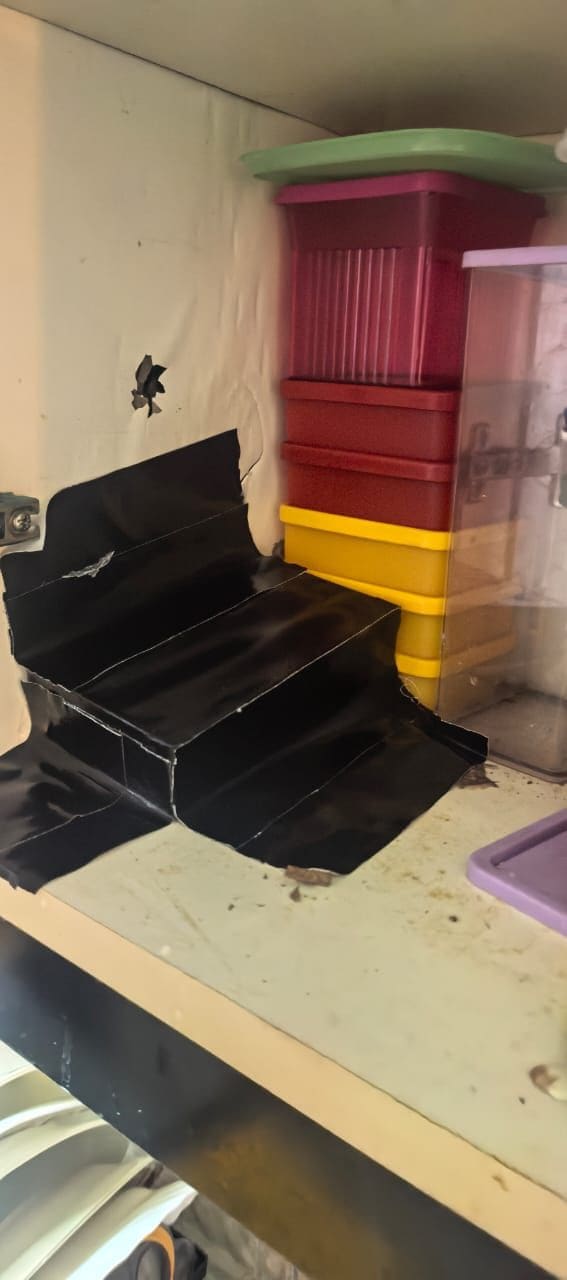
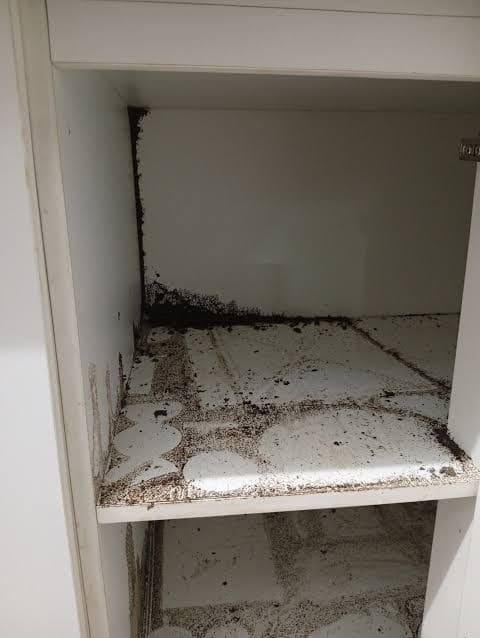
Fine soil or grit on the shelves, mud lines along the back panel or the wall behind it, wood that sounds hollow or crumbles when pressed, and small holes in the panels are the main signs of termites in a kitchen cabinet. Kitchens attract subterranean termites because the cabinets are wood or particleboard, they sit against the wall and floor, and the plumbing keeps the area damp. Don't spray the cabinet or tear out the panels. Move food away from the spot, take photos, and have it inspected so a bait station can go on the active trail.
Signs of termites in a kitchen cabinet
Kitchen cabinets are one of the most common places homeowners first find termites. Look for:
- Fine soil or grit on the shelves or the cabinet floor, especially in the back corners
- Mud lines running up the back panel, along the wall behind the cabinet, or from the floor into the plinth
- Panels that sound hollow, sag, or crumble when pressed
- Small holes or blistered paint on the cabinet sides or doors
- Swarming flying termites near the kitchen light in the evening, often after rain
Why termites go for kitchens
Most termite damage in Malaysian homes is caused by subterranean termites, which come up from the soil. A kitchen gives them three things together:
- Food. Cabinets are timber, plywood or particleboard, which termites eat.
- Damp. The sink, pipes and any small leak keep the area moist.
- Cover. The back of a cabinet sits against the wall and floor, so termites can come up through cracks and joints unseen and build mud tunnels behind it.
That's also why the damage is often worse than it looks from the front. Termites eat the back panel and plinth first, and you see the shelves last.
A recent kitchen job
On a recent job at a family home, termites were active inside a kitchen wall cabinet. We fixed an above-ground bait station over the active spot at the back corner of the shelf, where the termites were coming through.
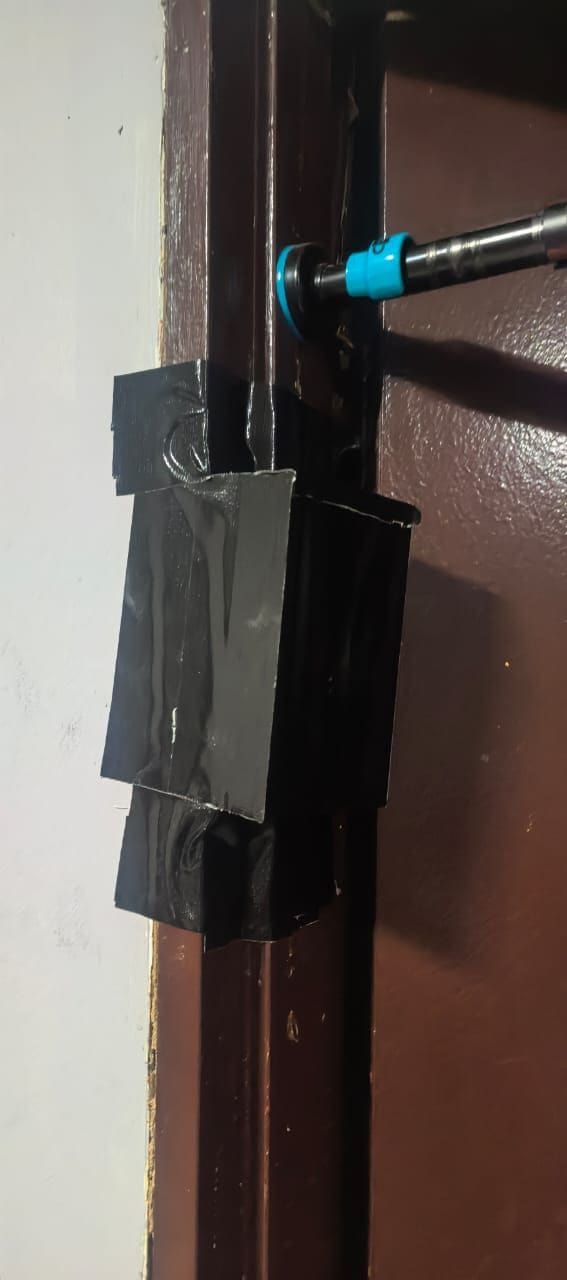
The same house had activity on a door frame as well, so a second station went there. Termites in one cabinet are rarely in one place only. They come from one colony, and that colony is usually foraging in more than one part of the house.
What to do if you find termites in your kitchen cabinet
- Don't spray the shelves. Spray kills the termites you can see, scatters the rest, and leaves insecticide where you keep food.
- Don't tear out the panels. Breaking open the mud and wood drives the termites away from the spot where a bait station would catch them.
- Move food, plates and cutlery away from the affected cabinet, and keep the area dry.
- Take photos of the soil, mud lines or damage, and send them to us on WhatsApp with your area.
How we treat termites in kitchen cabinets
We fix bait stations directly on the active trails inside or behind the cabinet. Termites feed on the bait and carry it back to the colony, and the colony dies off over a few weeks to a few months, depending on its size. The bait stays inside the station, so nothing is sprayed over your shelves. We check the stations on monitoring visits. See how long termite baiting takes.
Once activity has stopped, the damaged panels can be repaired or replaced. If you're renovating your kitchen at the same time, wait until the termites are gone before the new cabinets go in, or the colony may simply move into them.
Can you stop termites coming back to the kitchen?
- Fix leaks under the sink and around the pipes quickly
- Keep the cabinet bases dry and don't store wet mops or cardboard boxes against the wall
- Seal cracks in the floor and where pipes enter the wall, after the colony has been treated
- Check the cabinet backs once in a while, especially at the corners
For other places termites hide in a home, see the 7 signs of termites and termites in the ceiling.
Found soil or mud lines in your kitchen cabinet? Send us a photo and your area on WhatsApp for a quotation, or see our termite treatment.